

The Importance of the Right Tool
The holiday season is a time for family, friends, and food. The centerpiece of many tables is a perfectly roasted turkey. You have spent hours basting and seasoning it. The skin is golden brown, and the aroma fills the room. However, the job is not done yet. The final step is presenting that bird to your guests. This is where many people struggle. They grab whatever knife is in the drawer. Consequently, the turkey gets torn and shredded rather than sliced. The presentation suffers, and the meat can dry out. Therefore, having the right tool is essential. You need a dedicated carving knife for turkey.
A carving knife is not just a luxury; it is a necessity for a clean presentation. It differs significantly from a chef’s knife or a paring knife. It is designed specifically for slicing thin, uniform pieces of meat. Consequently, it glides through the flesh without tearing the skin. This ensures that each serving looks appetizing. Furthermore, using the correct knife makes the job easier and safer. You do not need to apply excessive force. This reduces the risk of slipping and injuring yourself. Therefore, investing in a good quality knife is a wise decision for any home cook.
In this article, we will explore the features of a good carving knife. We will also discuss techniques to help you master the art of carving. By the end, you will be ready to tackle your next holiday feast like a pro.
Understanding the Anatomy of a Carving Knife
To choose the best tool, you must understand its design. A carving knife for turkey has distinct characteristics. First, consider the blade length. Typically, these blades range from 8 to 15 inches. A longer blade is generally better for large birds. It allows you to cut through the breast meat in one smooth motion. Consequently, you avoid sawing back and forth. This sawing motion creates jagged edges and ruins the presentation. Therefore, look for a blade that is longer than the width of the turkey breast.
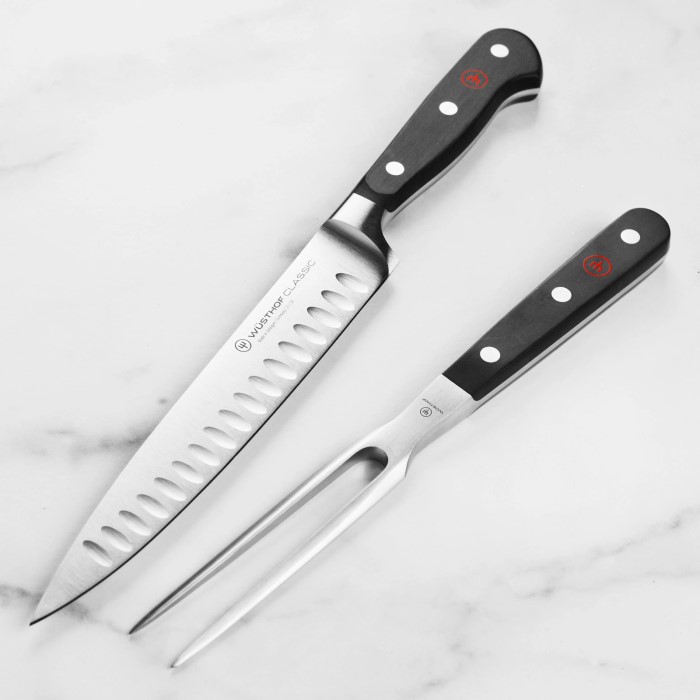
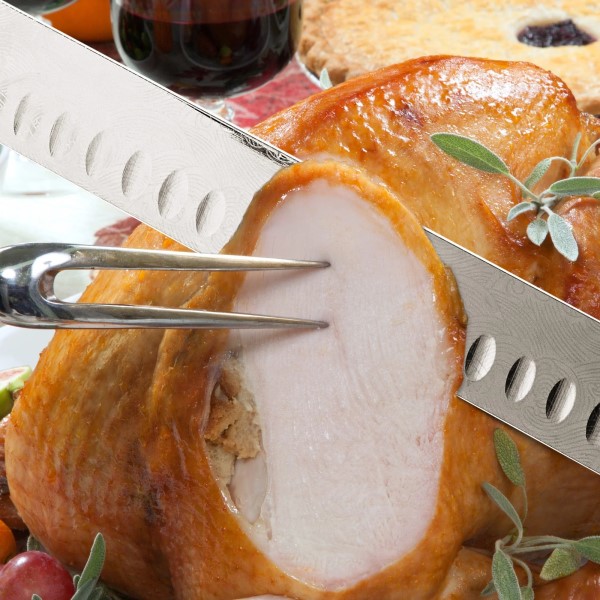
Furthermore, the blade shape is crucial. Carving knives are narrower than chef’s knives. This narrow profile reduces friction. As you slice, the blade moves through the meat effortlessly. Additionally, many carving knives feature a Granton edge. This means the blade has small hollow divots along the side. These air pockets prevent the meat from sticking to the metal. Consequently, the slices fall away cleanly onto the platter. This feature is particularly useful for moist, tender turkey meat.
The tip of the knife is also designed for precision. It is usually pointed but slightly rounded. This allows you to navigate around bones and joints. You can separate the drumsticks and wings with accuracy. Therefore, the knife serves multiple functions during the carving process. It is not just for slicing breast meat. It is also a tool for disjointing the bird.
Finally, consider the handle. It should provide a comfortable and secure grip. You will be holding this knife for several minutes. It needs to feel balanced in your hand. Handles made of wood or synthetic materials offer different benefits. Wood is classic and beautiful but requires more care. Synthetics are often dishwasher safe and more durable. Ultimately, the handle should feel like an extension of your arm. This ensures control and safety during use.
Material Matters: Steel Types and Durability
The material of the blade determines its performance and longevity. Most high-quality knives are made from stainless steel or high-carbon steel. Each material has its own set of advantages. Stainless steel is highly resistant to rust and corrosion. This is important because turkey juices are salty and acidic. Consequently, a stainless steel carving knife for turkey is easy to maintain. It does not require immediate drying after every use. Therefore, it is a convenient choice for busy cooks.
On the other hand, high-carbon steel is known for its incredible sharpness. It holds an edge longer than standard stainless steel. This means you do not need to sharpen it as frequently. However, it is more prone to discoloration and rust. If you choose high-carbon steel, you must be diligent about cleaning and oiling the blade. Therefore, it requires a bit more commitment. But many chefs argue that the superior cutting performance is worth the extra effort.
Recently, a new category called “powder metallurgy” or “SG2” steel has emerged. This steel combines the best of both worlds. It offers the sharpness of carbon steel with the durability of stainless steel. Knives made from this material are often more expensive. However, they are a fantastic investment for serious culinary enthusiasts. They provide an effortless slicing experience.
Electric vs. Manual: Which One Do You Need?
When shopping for a carving knife for turkey, you will encounter two main types: manual and electric. Both have their place in the kitchen. Understanding the differences will help you make the right choice. Manual carving knives offer the most control. You feel the resistance of the meat as you cut. This allows for very thin, delicate slices. Many traditionalists prefer the tactile feedback of a manual knife. Furthermore, they are quiet and require no power source. You can use them anywhere, even at the dining table.
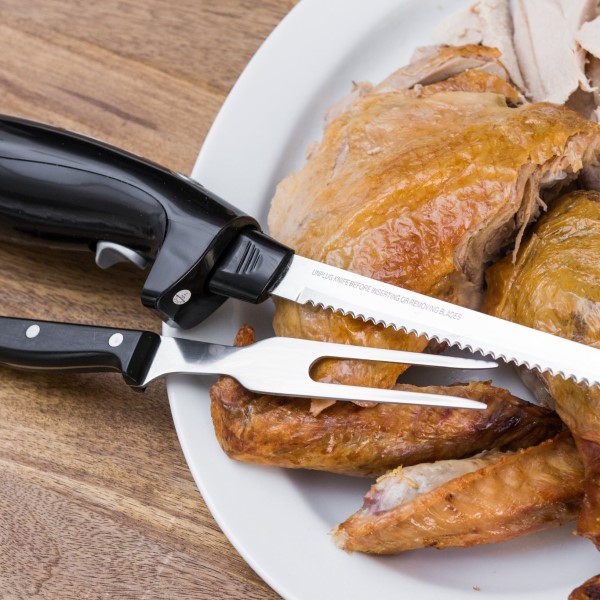
However, electric carving knives are a popular alternative. They feature two serrated blades that move back and forth rapidly. This sawing action cuts through meat quickly. Consequently, they are excellent for people with limited hand strength. If you have arthritis or wrist issues, an electric knife is a great solution. It does the work for you. You simply guide the knife through the turkey.
Additionally, electric knives are very efficient for large gatherings. If you need to carve multiple turkeys or hams, they save time. They are also effective at cutting through crusty bread or frozen foods. However, they have downsides. They can be loud. They also require an electrical outlet or charged batteries. Furthermore, cleaning them can be cumbersome. You often have to detach the blades carefully to wash them.
Therefore, the choice depends on your specific needs. If you value precision and tradition, go with a manual knife. It provides a classic carving experience. If you prioritize speed and ease of use, an electric model is the way to go. Some households even own both. They use the electric knife for quick weekday meals and the manual knife for formal holiday dinners. Whichever you choose, ensure it is designed for poultry.
Preparing Your Turkey for the Perfect Slice
Carving actually begins before you even pick up the knife. Proper preparation is key to successful slicing. First, you must let the turkey rest after cooking. This is a critical step that many people skip. When the turkey is hot, the juices are in motion. If you cut into it immediately, those juices will spill out onto the cutting board. The meat will become dry and tough. Therefore, tent the turkey with foil and let it rest for at least 20 to 30 minutes. This allows the juices to redistribute throughout the meat.
Consequently, the meat becomes firmer and easier to slice. It holds its shape better under the knife. While the turkey rests, you can prepare your carving station. You will need a large, stable cutting board. A board with a “moat” or groove around the edge is ideal. This catches the juices and keeps your table clean. Furthermore, ensure your carving knife for turkey is sharp. A dull knife is dangerous and ineffective. Run it through a sharpening steel a few times to align the edge.
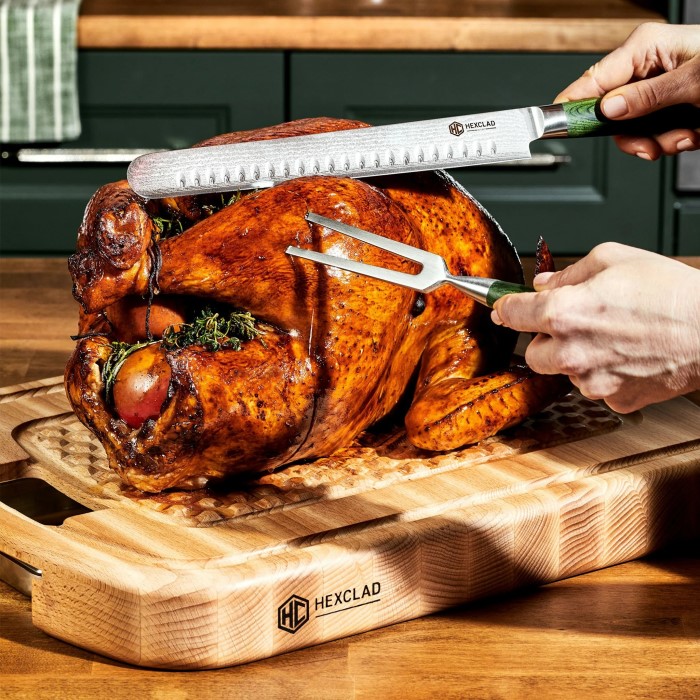
Next, arrange your tools. You will need the knife, a large fork for holding the bird, and a platter for the meat. Some people also like to have kitchen shears nearby for cutting through skin. Having everything ready prevents scrambling later. It makes the process smooth and professional.
Step-by-Step Guide to Carving Like a Pro
Now that you are prepared, it is time to carve. Follow these steps for a beautiful presentation. First, remove the leg. Cut through the skin between the leg and the breast. Pull the leg away from the body. You will see the joint connecting the thigh to the carcass. Cut through this joint with the tip of your carving knife for turkey. Do not cut through bone; aim for the soft spot in the joint. Once separated, you can separate the drumstick from the thigh if desired.
Next, move to the wings. Repeat the same process. Cut through the skin and find the shoulder joint. Sever the joint to remove the wing. Place the legs and wings on the platter. These are often preferred by those who like dark meat. Now, you have clear access to the breast meat. This is where your knife truly shines.
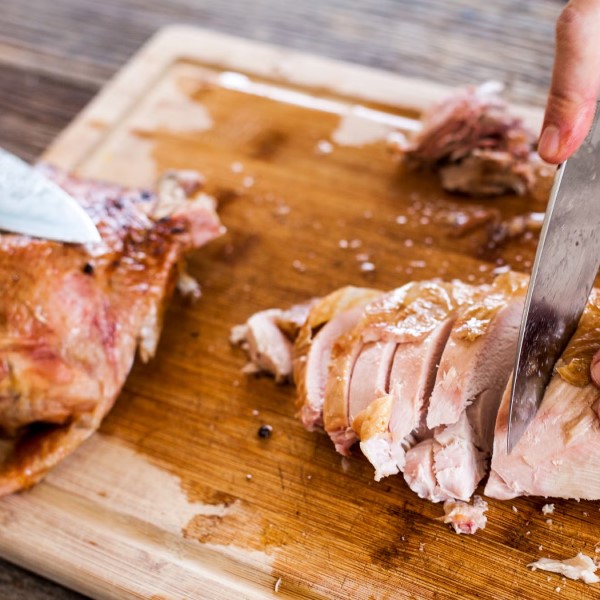
Start slicing the breast meat from the top. Make a long, horizontal cut at the bottom of the breast, parallel to the cutting board. This creates a base. Then, start slicing downward from the top. Make thin, even slices. As you cut, the slices will fall away freely because of your initial horizontal cut. Use long, smooth strokes. Do not push down hard; let the knife do the work. Glide the blade through the meat.
Continue slicing until you reach the breastbone. Work your way down the bone to get every bit of meat. Repeat this process on the other side of the turkey. Arrange the white meat on the platter neatly. Finally, remove the remaining meat from the carcass. You can save this for sandwiches or soup. By following this method, you maximize the yield from your bird. You also create a stunning display for your guests.
Maintenance and Care for Your Knife
A good carving knife for turkey is an investment. To keep it performing well, you must care for it properly. The most important aspect is cleaning. Always wash your knife by hand. Avoid the dishwasher. The high heat and harsh detergents can damage the blade and the handle. Furthermore, the knife can bang against other items in the dishwasher, dulling the edge. Therefore, use warm, soapy water and a soft sponge. Wipe the blade from the spine to the edge to avoid cuts.
Drying is equally important. Do not let the knife air dry. Water spots can form, which can eventually lead to rust on some steels. Instead, dry it immediately with a soft cloth. Store the knife safely. Do not throw it in a drawer with other utensils. This is a sure way to dull the blade. Use a knife block, a magnetic strip, or a blade guard. This protects the edge and keeps you safe.
Sharpening is a routine part of maintenance. Even the best knives dull over time. You should hone your knife with a steel rod before every use. This realigns the microscopic teeth of the edge. It keeps the knife feeling sharp. However, honing does not remove metal. Eventually, you will need to sharpen the knife on a whetstone or use a professional service. This restores the actual V-shape of the edge.
Additionally, be mindful of the cutting surface. Never cut on glass, granite, or marble boards. These surfaces are harder than steel. They will instantly dull or chip your knife. Wood or soft plastic boards are the best choices. They absorb the impact of the blade. By following these care tips, your knife will last for generations. It will be ready for every holiday season.
Safety Tips for Carving
Carving a large bird involves risks. You are working with a very sharp tool and a slippery object. Therefore, safety should be your top priority. First, always cut away from your body. This seems obvious, but it is easy to forget in the heat of the moment. If the knife slips, it should move away from you, not toward you. Furthermore, keep your fingers clear of the blade’s path. Use the carving fork to hold the turkey steady. Your non-dominant hand should be safely out of the way.
Second, ensure your footing is stable. Do not carve on a wobbly table. If you are carving at the table, make sure it is sturdy. If the table moves, you could lose control of the knife. Additionally, focus on the task. Do not get distracted by conversation or other things happening in the room. Carving requires your full attention. If you need to look up, stop cutting. Place the knife down safely before engaging with someone.
Third, handle the carving knife for turkey with dry hands. Wet hands can slip on the handle. This can cause the knife to slide forward. If your hands are wet, dry them thoroughly before picking up the knife. Some handles have textured grips for added security. This is a good feature to look for when buying a knife.
Finally, never try to catch a falling knife. This is a classic kitchen mistake. If the knife falls, step back and let it hit the floor. Trying to catch it usually results in a severe injury. Once the knife is on the floor, pick it up carefully. Check the blade for damage before using it again. By respecting the tool and following these rules, you can carve safely and confidently.
FAQ: Common Questions About Carving Knives
What type of knife is best for carving meat?
The best knife for carving meat is a dedicated slicing or carving knife. It should have a long, narrow blade, typically between 10 and 14 inches. The long blade allows for smooth, single strokes. This results in clean, even slices. A flexible blade is good for fish, but a stiffer blade is better for turkey. Look for a knife with a Granton edge to prevent sticking. This ensures the meat slices release easily from the blade.
What should I carve my turkey on?
You should carve your turkey on a large, stable cutting board. Wood or plastic are the best materials. Avoid glass or ceramic boards as they dull knives. A board with a “juice groove” or moat is highly recommended. This catches the liquids released during carving. It keeps your counter or table clean. Ensure the board is large enough to hold the entire turkey comfortably. It should not wobble or slide around.
Is a santoku knife good for carving turkey?
A santoku knife is not the ideal choice for carving turkey. While it is a versatile kitchen knife, it is usually too short and wide. The blade length of a santoku is typically 5 to 7 inches. This is shorter than the width of a turkey breast. Consequently, you would have to saw back and forth. This tears the meat rather than slicing it cleanly. A long carving knife provides a much better result for large poultry.
Conclusion
The holiday meal is a culmination of effort and love. You deserve to present it in the best possible light. Using the right carving knife for turkey transforms the experience. It turns a frustrating chore into a satisfying skill. You can serve beautiful, uniform slices to your guests. This elevates the dining experience for everyone at the table. Furthermore, a quality knife is a lasting tool. With proper care, it will serve you for many years to come.
Remember the key points we have discussed. Choose a knife with a long, narrow blade. Consider the material and handle design. Prepare your turkey by letting it rest. Use steady, smooth strokes when cutting. And always prioritize safety. These tips will ensure success. Whether you choose a manual or electric model, the right tool makes all the difference. So, check your kitchen drawer today. Make sure you are ready for your next feast. Your perfectly carved turkey awaits. Enjoy the meal and the memories you create.